We are a non profit group committed to the social, cultural and economic improvement of our historic coastal fishing community located in Trinity Bay Newfoundland Canada
One of the characters from one of the many hilarious concerts performed by the Champney's West Recreation Group and Company.
Maybe you would like to leave a comment here and add a description of your own or nominate him for an award somewhere! He wasn't voted "Off The Island".
The annual concert is well received loved and anticipated be hundreds.
The Heritage museum in Champney’s West became a reality due to a couple of significant occurrences. The first, being the generous gift of the original house, made by Dr. Marjorie Ragosta in honor of her mother Ella Freeman. The second being the hard work and dedication of local volunteers, supported by government programs, to restore the house, acquire local artifacts and begin recording the written history of the people.
We are happy to say that we have now created a web page introducing the Ella Freeman Memorial Heritage House, to tell you how it came about and to give you a glimpse of what you will find in there when you visit.
In 2010 CWRG achieved the goal of establishing a Heritage House Museum. This building and the archives it holds came about as result of the significant support and the dedication of many individuals and organizations. The Ella Freeman Heritage House Museum was created and came to life with a ribbon cutting ceremony in August 2010. Many individuals have contributed volunteer time and effort to enhance the building and many of our elders have donated items and memories to the project.
Did you know that the building and land now housing the heritage house was donated by Dr. Marjorie Rogosta and family along with a tremendous amount of her research?
Getting to the village of Champney's West Newfoundland, better known as "The Island" is easily accomplished by paved all weather roads. If you are arriving by road follow Route 230-21 from the Discovery Trail. The road to the Island starts at Port Rexton, crosses an Isthmus after a short distance and leads right to the Champney’s West a historic fishing port and photographer's paradise.
Discovery trail is highway 230; on it visitors navigate their way along the Bonavista Peninsula. Beginning at Clarenville where it meets the Trans Canada Highway, Discovery trail winds its way to Bonavista, the place where John Cabot made landfall in 1497 and discovered North America.
If you are arriving by boat, once in Trinity Bay set course and navigate to Champney’s West Harbor located at N 48.38319 / W 53.29807 or UTM 22 U 329832 E 5361493 N. View your charts and pay attention for rocks and shoals marked. Bennett’s point rock and sunker are marked with a light buoy. The dock can accommodate loaded fishing vessels up to 65 feet or small large pleasure vessels.
What to See and Do In Champney's
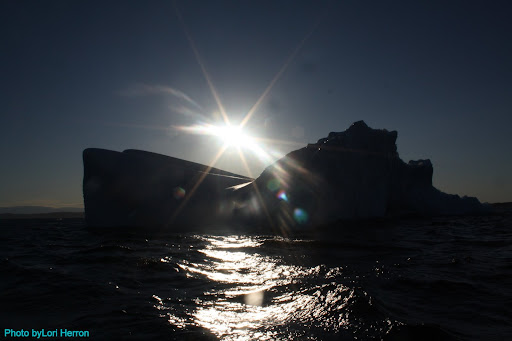
The Island offers spectacular scenery along the Fox Island hiking trail where you climb to the top for a panoramic view of beaches, hills, marine life, seabirds, icebergs and miles of blue water. You will also find evidence of the fortifications established here in 1711 by Captain Crane. More on Fox Island Trail
The local wharf in Champney’s West was the historical meeting place of the community and remains the focal point of many activities today. The sheltered harbor is lined with fishing stages that are well up kept and provide a real glimpse of what historic Newfoundland fishing “Rooms” looked like. Local fishing boats are commonly seen in the harbor.
Champney’s West and its people are well known for their hospitality, musical talent, the annual cardboard boat races, old fashioned concerts, it’s heritage house museum and most of all dedication to community preservation.
To see all that the Island offers and to get to know us better use the page links above.
Please take a minute to check out our latest initiative to create new attractions. We are raising funds to create the Champney’s West Aquarium Project.
Come Visit Champney's Town!
Here's a sample of a sing along at the community hall
The recreational groundfish fishery will be open in waters around the province for three weeks this summer from Saturday, July 24 to Sunday, Aug. 15 and for one week in the fall from Saturday, Sept. 25 to Sunday, Oct. 3.
As in previous years there will be a daily bag limit of five fish, and a boat limit of 15 fish when three or more people are fishing. Come to the Island and fish!
Champney's West - locally known as the Island - Is located in Trinity Bight along the north shore of Trinity Bay. The town has 56 full-time residents whom work hard to add to the quality of life and to keep the community alive and active. During the summer the population increases when many vacationers and part time residents spend time in the community at summer homes.
The Island has a very interesting and lengthy history dating back at least 337 years. At various times in it's history well over 200 residents called Champney's West home. It was once a thriving fishing community due to it's excellent harbor and proximity to fishing grounds. Today the harbor remains in top condition with many renovations having been recently made to fishing stages (rooms). There are however far less full time fishermen than seen in days gone by.
Sometime during the spring of 1675 the Brigantine Mary, a 100 ton sailing ship was commissioned to navigate to the new world specifically the isle of Newfoundland. The "Mary" was under the command of John Le Cross, a well known fishing admiral of the time.
After making the journey across the Atlantic Ocean, Captain Le Cross reached the Island of Newfoundland and entered Trinity Bay on the north side. He then traveled on until he reached the land mark known as the Horse Chops. From the Horse chops he sailed further into the bay and came upon the entrance of a inlet known as Salmon Cove. Upon entering salmon cove he apparently made the decision to investigate the potential of the area with the view of determining the suitability of the location for establishing a "plantation".
The written account of the voyage is contained in the log of Captain Le Cross and a quote from it reads as follows:
[upon entering the mouth of the harbour we took soundings on the western side of the harbour where one stand alone rock lying adjacent to a point running to the south exists, it seems to be the only visible rock protruding from the water the depth of five fathoms was observed, lying to the east of this point is a low sloping point of land, this itself assures a safe and sheltered cove. Moving northwards a small island was observed lying no more than a hundred feet eastward of the mainland, here advantaged us to make fast the Brig between the mainland and island. was here that we observed an in draft lying to the west with only a minute amount of water remains at bottom tides, the low sloping land at waters edge gives us a fair advantage where we can place rooms and plant crops. One can only perceive as to the sheltered safety of one place. Thence northwards of this little island is the bottom of this long sheltered harbour, this here that a river of such is observed, one can only imagine the ease of cutting lungers and timber farther in draft. On either side of the river there is ample amount of water to tie a hundred ships. To the east of the island there is a small inlet charactered by steep sloping hill which offer the most ample protection from prevailing winds. Water depths can be from 5 to 20 fathoms in depth and one could navigate at anytime within this cove]
Captain Le Cross established a plantation in the area of Salmon Cove, likely in what is today known as Champney's West. This was at the time were the Migratory Fishing industry was ending in Favor of a "planter" live here type system. Please visit our history section for a more in depth presentation of the known history of Champney's West. Read More Champney's History Here.
Working Toward The Future
Since our successful Come Home Year and dedication of the Ella Freeman Heritage House in 2010, the Champney’s West community has been planning to add a wonderful new attraction on the Bonavista Peninsula: The Champney’s West Aquarium. Please take a moment to learn more by clicking here!